Use Case
Automating Planning in Food & Beverage

Industry/Beverage Manufacturing
Functionalities
#production-scheduling #optimization #automation #constraint-solver #supplychain
Eliminating manual planning across 5 filling lines with AI-powered production scheduling
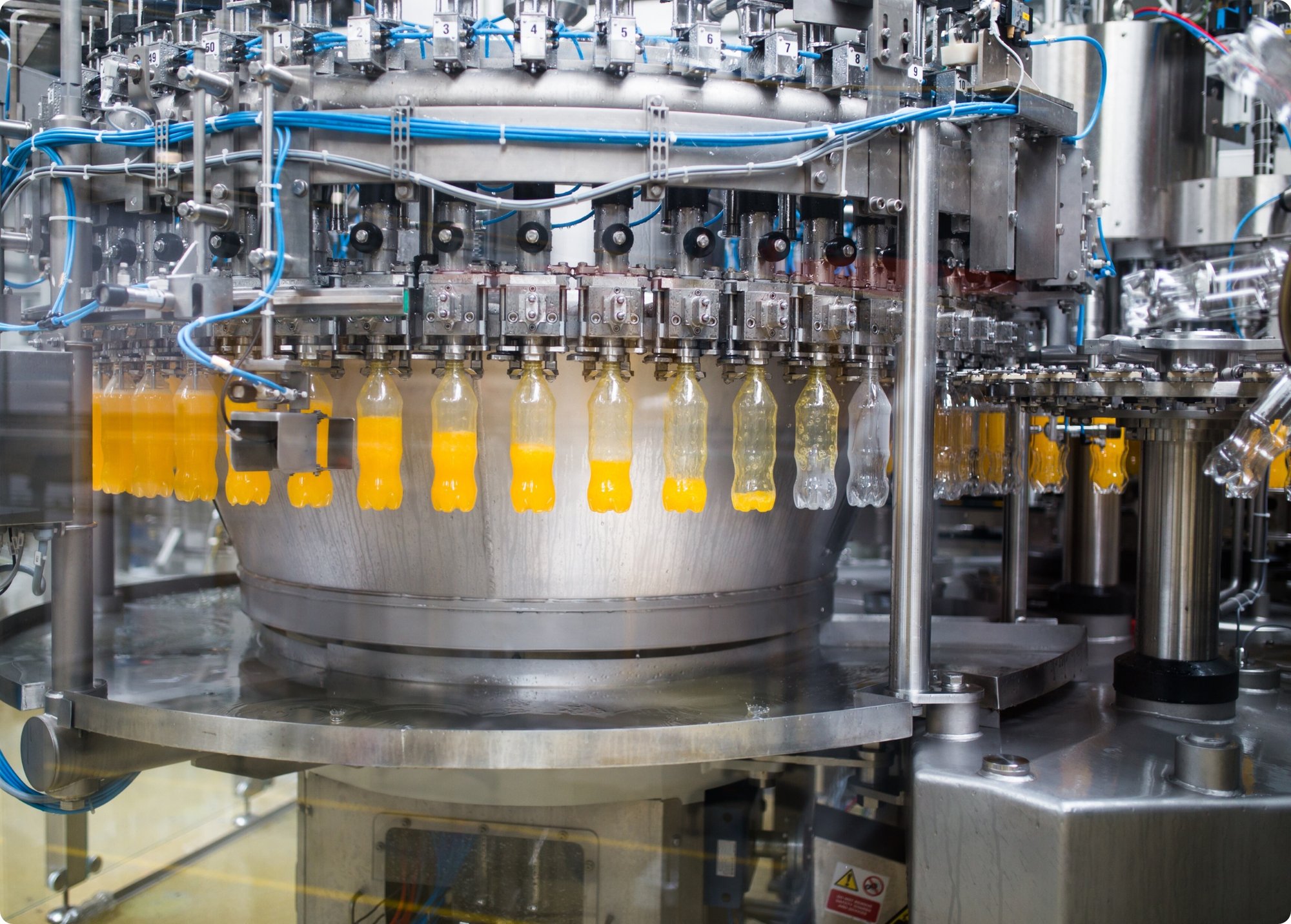
A beverage manufacturer was planning all his five filling lines manually. Every week, production, planning and maintenance leads cross-referenced sales forecasts, stock levels, machine states and order books across separate systems with no integrated tool to tie them together.
The result was underutilised lines, avoidable downtime, overproduction of short-shelf-life SKUs, and costly emergency weekend shifts whenever the plan slipped.
Working with Wizata, the manufacturer replaced this manual process with an automated scheduling engine that builds an optimised, plant-wide production plan in minutes and explains every decision in plain language.
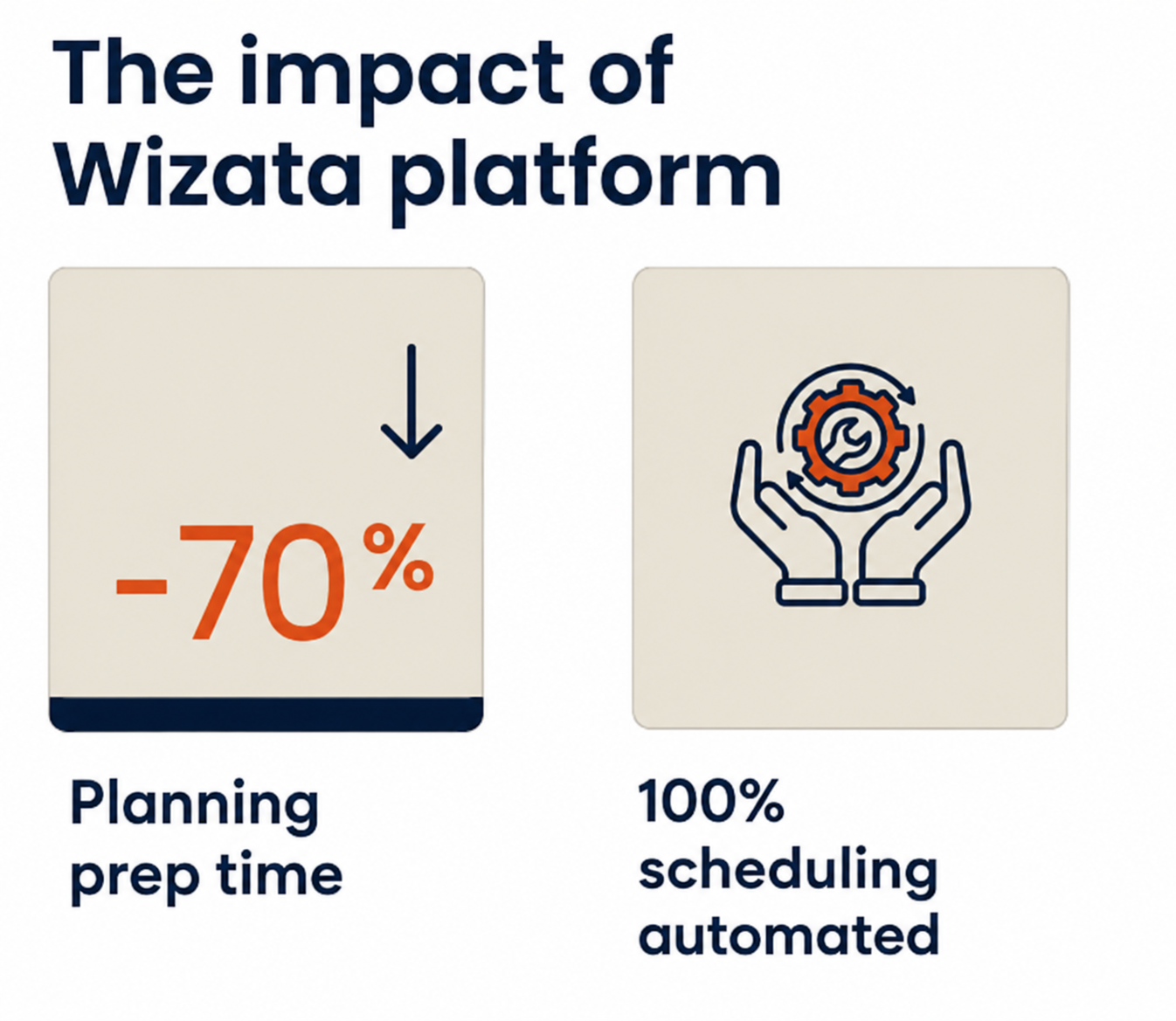
The outcome: zero manual planning effort, a 70% reduction in planning prep time, and the elimination of emergency Saturday shifts.
Challenge
Scheduling five filling lines was a fully manual, weekly exercise. Planners pulled data from five to seven disconnected source systems and reconciled it by hand, with no single source of truth. This created four recurring problems:
➜ Manual scheduling, every week
Production, planning and maintenance leads cross-referenced forecasts, stock, machine state and order books by hand ➜ slow, error-prone, and impossible to scale.
➜ Lines running under capacity
Without optimisation, filling lines sat idle or ran in the wrong sequence. Capacity the plant already paid for went unused.
➜ Unplanned downtime and waste
Poor sequencing drove avoidable stoppages and overproduction of short shelf-life SKUs that ended up scrapped.
➜ Emergency Saturday shifts
When the week's plan slipped, the only fix was costly weekend shifts to catch up on orders.

Approach
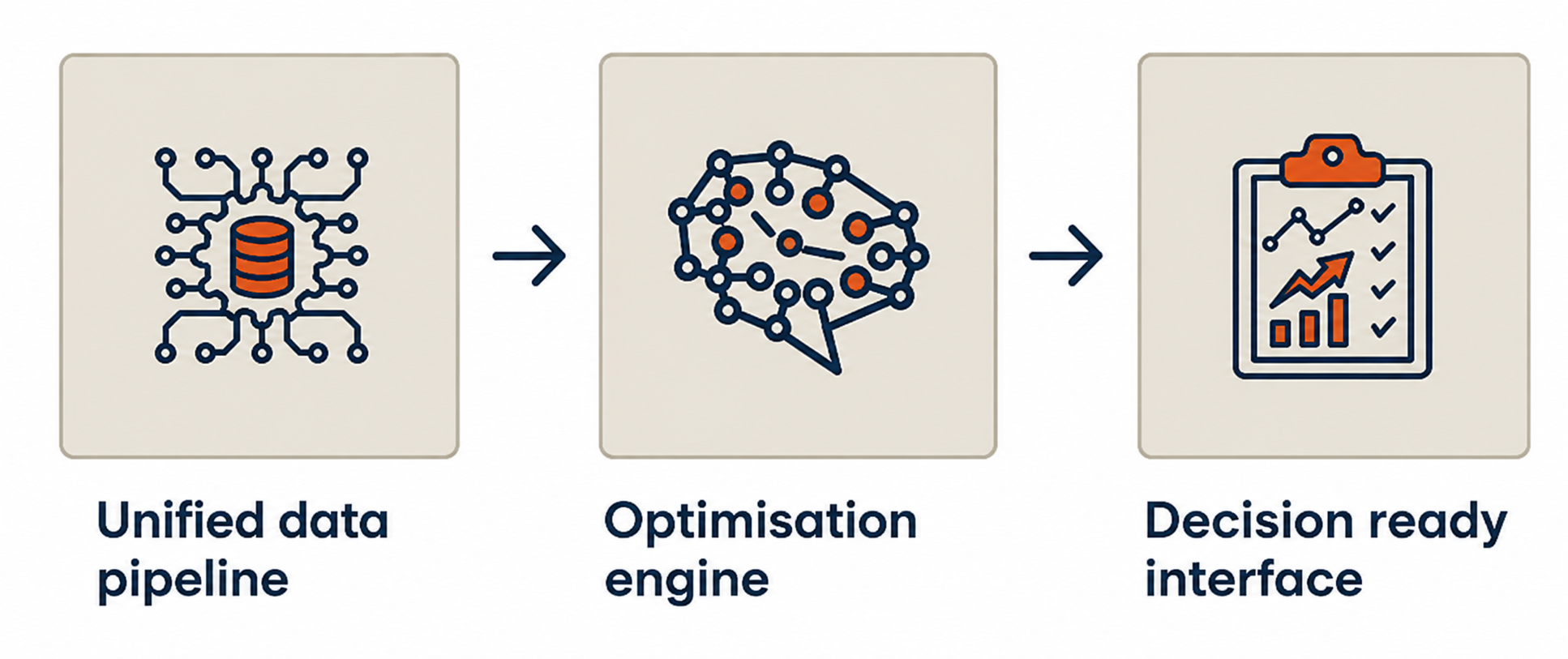
Wizata delivered an automated production scheduling system built on three layers, so schedules are generated automatically and every decision is explainable.
The following activities were performed:
➜ Unified data pipeline
Five to seven source systems ➜ stock, sales forecasts, machine states and order books — were merged into one clean schema, giving planners a single source of truth.
➜ Optimisation engine
An OR-Tools CP-SAT constraint solver sequences every order automatically against the plant's real-world constraints to hit target KPIs ➜ line utilisation, on-time delivery and waste reduction.
➜ Decision-ready interface
Planners see the proposed schedule, compare scenarios side by side, and validate with one click. Every plan comes with a plain-language rationale ➜ no black box.

Outcome
Automating production scheduling delivered measurable change on the plant floor:
➜ –70% reduction in planning prep time
➜ 100% of scheduling automated. Zero manual planning effort
➜ 0 emergency Saturday shifts
➜ Higher line utilization. Capacity the plant already pays for is actually used. Fewer idle hours across all five lines.
➜ Fewer unplanned stoppages. Smart sequencing cuts avoidable downtime and the firefighting that comes with it.
➜ Less overproduction and waste. Short shelf-life SKUs are produced to demand, not dumped as scrap.


Get in touch with one of our experts
Martina Zanetti