

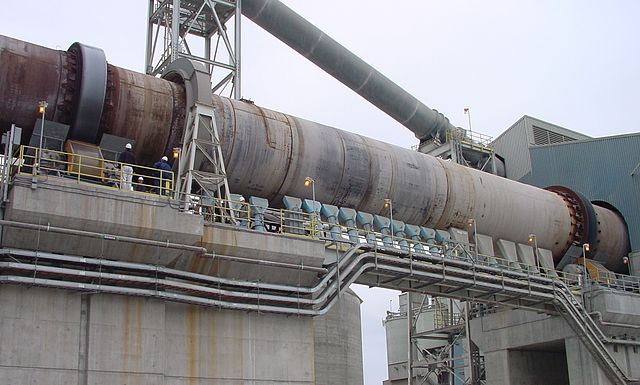
A kiln can be running continuously, meeting production targets, and still be one of the plant's largest hidden profit leaks. Excess fuel consumption, unstable burning zones, false air, variable feed chemistry, and avoidable refractory losses all compound over thousands of operating hours. Knowing how to improve kiln efficiency means treating the kiln as an integrated thermal process, not a collection of separate mechanical and control problems.
For cement, lime, minerals, metals, and chemical operations, the goal is not simply to push more tons through the vessel. It is to produce consistent material at the required quality with the lowest practical specific energy use, stable equipment conditions, and minimal operator intervention. That requires disciplined operating fundamentals, reliable instrumentation, and a way to turn process data into timely decisions.
How to Improve Kiln Efficiency Starts With a Baseline
A useful efficiency program begins by defining the losses that matter. Total fuel use per ton is the headline metric, but it does not explain why performance changes. Plants need a baseline that connects energy consumption to throughput, product quality, raw-feed properties, kiln availability, and ambient conditions.
Track specific thermal energy consumption by product grade and operating campaign. Pair it with kiln feed rate, fuel rate, excess oxygen, draft, shell temperature, preheater or recuperator temperatures, free lime or equivalent quality indicators, and unplanned downtime. For electrically heated kilns, include kWh per ton, power quality, heating-zone performance, and peak demand exposure.
The key is to compare like with like. A higher fuel rate may be justified during a feed chemistry change, startup period, or shift to a more demanding product specification. It is not justified when the root cause is unmeasured air infiltration or a control loop that drifts for hours. Separating normal operating variation from correctable loss gives the improvement effort commercial credibility.
Control the Heat Balance, Not Just the Flame
A kiln is efficient when heat is transferred where and when the process needs it. Too little heat produces under-burned material and quality variation. Too much heat damages refractories, increases fuel use, and may create rings, coatings, or other conditions that restrict stable operation.
Reduce excess air and false air
Combustion needs enough oxygen for complete fuel burn, but excess oxygen carries hot gas out of the system. The result is avoidable stack loss and, in some cases, reduced flame temperature. Setpoints should be based on fuel characteristics, burner design, process demand, and emissions constraints rather than a single fixed target.
False air deserves the same attention as combustion air. Leaks at kiln seals, ductwork, access doors, expansion joints, and preheater connections cool process gases and force the system to heat unnecessary air. They can also destabilize draft and make oxygen readings misleading. Regular leak inspections, thermal imaging, pressure surveys, and seal maintenance are often among the fastest-payback actions available.
Maximize useful heat recovery
In long rotary kiln systems, efficiency depends heavily on recovering heat from exhaust gas and cooled product. Preheaters, calciners, coolers, recuperators, and waste heat recovery equipment must be evaluated as one thermal chain. A cooler that sends excessively hot clinker or product downstream may be reducing recoverable heat to the kiln, even if its own operation appears acceptable.
Heat exchanger fouling, material buildup, poor gas distribution, and bypassing can quietly raise fuel demand. Monitor temperature differentials and pressure drops by stage, then investigate deviations early. The right intervention depends on the constraint: cleaning a blocked stage, improving gas distribution, adjusting material loading, or changing the maintenance interval can each be appropriate.
Stabilize Feed, Fuel, and Residence Time
Most kilns do not lose efficiency because operators lack a target. They lose efficiency because changing conditions make the target difficult to hold. Feed moisture, particle size, mineral composition, calorific value, alternative-fuel substitution, and feed-rate fluctuations all change the heat required for a stable burn.
Raw material preparation has a direct thermal value. More consistent feed chemistry and finer, appropriately controlled particle size reduce the corrective firing required inside the kiln. High moisture is particularly expensive because evaporation consumes heat before the material can progress through calcination, sintering, or reaction. When reducing moisture is feasible upstream, the energy benefit should be measured against the cost of drying and material handling.
Fuel quality and delivery consistency matter just as much. Alternative fuels can reduce cost and emissions, but high variability in moisture, particle size, heating value, or feed rate can create flame instability and localized temperature swings. The operational answer is not necessarily to abandon alternative fuels. It is to strengthen fuel characterization, dosing accuracy, combustion monitoring, and control logic so substitution is managed within proven process limits.
Residence time is another balancing act. Increasing feed may improve throughput but can shorten the time available for heat transfer and reaction, raising fuel use per ton or degrading product quality. Reducing feed can improve stability but may increase fixed heat losses per ton. The optimal point is determined by the full process response, not by kiln speed alone.
Protect Refractories and Mechanical Condition
Refractory condition is a production and energy issue. Worn lining increases shell heat loss, while inappropriate coating behavior can constrict the kiln, disrupt material flow, and create unstable thermal zones. Excessive shell temperature is an obvious warning, but a trend in shell temperature across kiln sections is more valuable than any one reading.
Combine shell scanner data with refractory inspection findings, process temperatures, and operating history. This makes it easier to distinguish a localized lining issue from a process upset that is temporarily changing heat transfer. Maintenance teams can then plan interventions based on risk and economic impact rather than reacting after a failure threatens the campaign.
Mechanical alignment, roller condition, drive performance, and seal integrity also affect thermal performance. Misalignment can increase power demand and accelerate refractory wear. Poor seals admit false air. Unstable rotation can alter bed movement and residence time. These are not separate reliability problems. They are part of the kiln efficiency equation.
Move From Reactive Control to Predictive Decisions
Traditional kiln control relies on operators interpreting dozens of signals, often while conditions are changing faster than laboratory results or standard dashboards can explain. Experienced operators remain essential, but they should not be expected to manually detect every multivariable relationship across the process.
A practical industrial AI approach combines historian data, laboratory quality data, maintenance records, energy meters, and real-time sensor streams in a contextualized data layer. Models can identify the operating conditions associated with low specific energy use, stable quality, and reduced variability. They can also forecast likely deviations, such as a quality drift or rising energy demand, before the impact becomes visible in a finished product test.
The value is not a black-box recommendation. It is an operator-ready action: adjust fuel, feed, draft, oxygen, burner settings, or cooler conditions within defined constraints, with clear visibility into the expected trade-off. For example, a model may show that a modest reduction in excess oxygen is safe only if feed moisture remains below a threshold and draft stays stable. That is the kind of context that turns data into controlled action.
Platforms such as Wizata help industrial teams deploy these use cases across data sources and assets, then operationalize them through a governed control interface. The priority is scale: a successful kiln optimization should not remain an isolated pilot or depend on one specialist's spreadsheet.
Build an Efficiency Program That Operators Can Sustain
The strongest programs combine daily operating discipline with longer-term optimization. Give operations, process engineering, maintenance, and energy teams shared measures, including specific energy, quality stability, false-air indicators, availability, and refractory risk. If teams are rewarded only for throughput, they may unintentionally operate beyond the energy-efficient window. If they are rewarded only for fuel reduction, they may create quality or reliability exposure.
Establish a regular review of meaningful deviations, not just monthly averages. Look at the operating periods where energy per ton rose, quality drifted, or process variability increased. Determine whether the cause was material, equipment, control, or operating practice, then assign a corrective action with an owner and a measurable result.
Start with the constraints that can be addressed quickly: air leaks, calibration gaps, unstable dosing, fouled heat-transfer surfaces, and poorly tuned control loops. Then use integrated data and predictive models to address the harder multivariable decisions. A kiln becomes materially more efficient when the plant can recognize a developing loss early enough to correct it while it is still small.


