

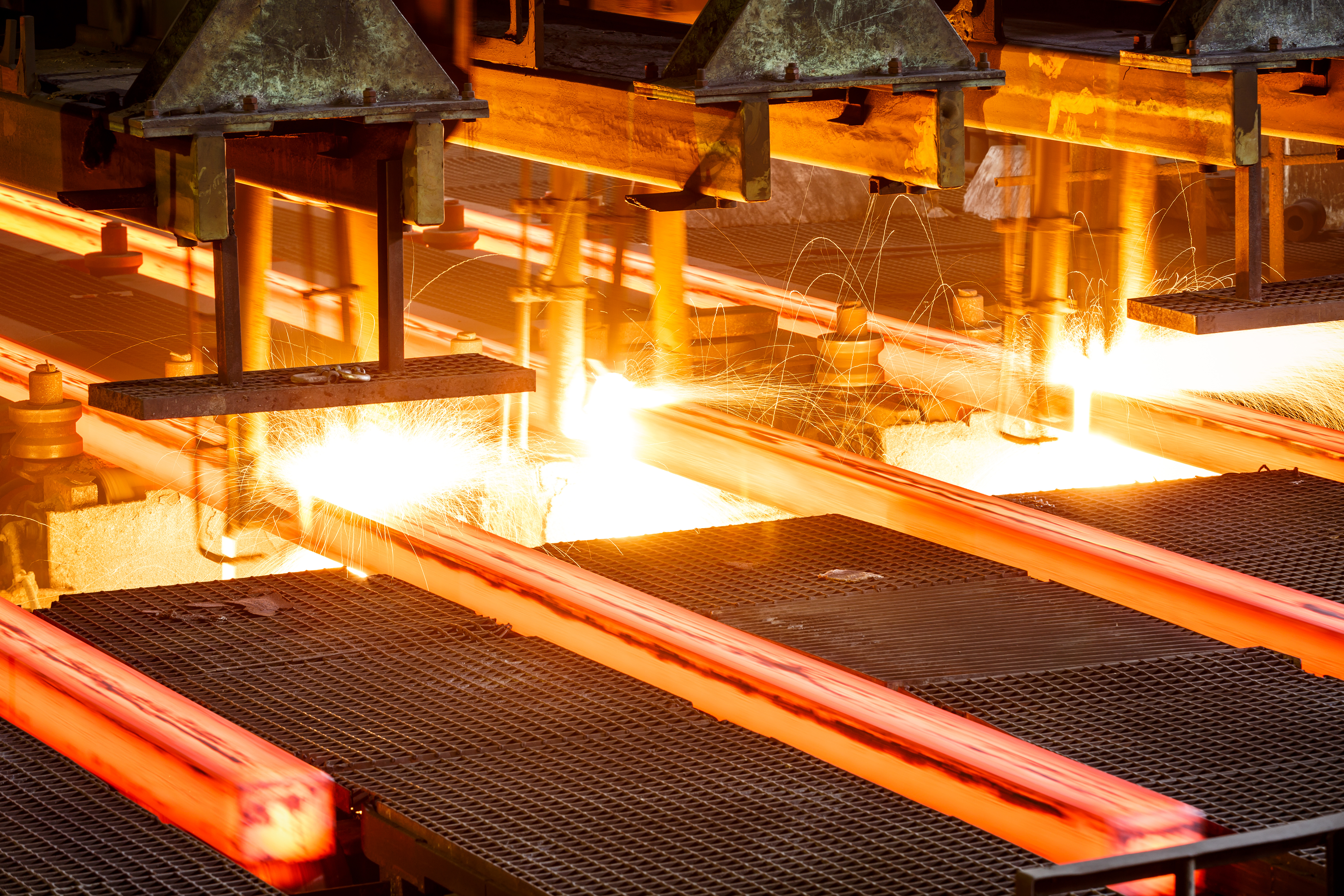
A furnace running only a few degrees hotter than required can consume significant additional fuel over a campaign. A mill that repeatedly corrects unstable temperatures, chemistry, or speed pays again through yield loss, rework, and constrained throughput. Steel AI energy savings are created when plants turn this operating variability into decisions that improve the process while there is still time to act.
For steel producers, energy is not a reporting metric that can be optimized at month-end. It is embedded in every production decision: scrap mix, burner control, oxygen flow, furnace charging, casting speed, rolling schedule, idle time, and equipment condition. The practical opportunity for AI is to connect those decisions to the real-time conditions that drive energy intensity.
Where energy is lost in steel production
The largest opportunities are rarely hidden in a single tag or one piece of equipment. They sit in the interaction between process stages and operating constraints. An electric arc furnace, for example, may consume more electricity because charge quality varies, arc stability deteriorates, or operators must compensate for downstream requirements. A reheating furnace can use excess fuel because slab temperature, line pace, combustion conditions, and furnace zones are not being managed as one system.
This is why a simple energy dashboard has limited value. It can show that consumption increased, but it does not reliably explain which controllable conditions caused the increase or what operating action is safe. Plants need to distinguish normal energy demand from avoidable demand, then give teams a recommendation they can trust.
The same principle applies across the steel route. In direct reduced iron operations, gas use and metallization must be managed together. In ladle metallurgy, temperature control must protect both energy consumption and downstream castability. In hot rolling, the energy cost of reheating cannot be separated from pacing, transfer delays, temperature loss, and product specifications.
Steel AI energy savings start with process context
Industrial AI produces value when it understands the process context around raw data. That means combining historian signals with production orders, material properties, quality results, maintenance events, operator actions, laboratory data, and equipment states. Without this context, models can mistake a planned grade change or a production slowdown for poor performance.
A useful AI application identifies the conditions associated with lower energy use while preserving the operating limits that matter: chemistry, temperature, quality, throughput, safety, emissions, and equipment integrity. It does not simply push a fuel or power setpoint downward. It estimates the likely result of different operating choices and recommends the option with the best overall economic outcome.
For example, a furnace model may predict energy consumption based on material mix, initial temperature, zone temperatures, combustion variables, line speed, and target discharge temperature. The recommendation must also account for constraints such as maximum heating rate, burner limits, steel grade requirements, and the downstream mill schedule. That is materially different from a generic prediction model that says tomorrow's gas use will be high.
From prediction to an operational decision
Prediction alone does not reduce an energy bill. The model needs an operating home: a control room screen, a shift workflow, or an automated control loop. It must show the current deviation, the recommended action, the expected impact, and the reason the recommendation is valid under current conditions.
In early deployment, this often means decision support. Operators review recommendations and retain control while the plant measures adoption, performance, and exceptions. Once the model has demonstrated consistent value and the operating boundaries are clear, selected actions can move toward closed-loop automation. The right endpoint depends on process criticality, available controls, and site governance.
High-value use cases for steel plants
The strongest use cases have a measurable energy baseline, sufficient data history, controllable process variables, and a clear owner in operations. They also improve a constraint that the business already cares about, such as yield, throughput, or quality.
Reheating furnace optimization is a common starting point. AI can recommend zone setpoints, fuel-to-air adjustments, and pacing changes that deliver the required discharge temperature with less overheat and fewer corrective actions. The financial case improves further when lower fuel use is paired with reduced scale loss or less temperature-related rolling disruption.
For electric arc furnaces, models can support the management of power input, oxygen and carbon injection, charge mix, tap temperature, and melting profile. The goal is not to optimize any one variable in isolation. It is to reduce specific electricity consumption and tap-to-tap variability while maintaining productivity and furnace protection.
Hot strip, plate, and long-product mills offer another route to savings. AI can identify avoidable reheating, excess transfer time, unstable speed profiles, and temperature deviations that lead to compensating energy use. These opportunities often require coordination across furnace, rolling, quality, and production-planning teams rather than a standalone mill model.
Utilities should not be overlooked. Compressed air, cooling water, steam, pumps, fans, and gas networks can carry substantial losses. Yet utility optimization must be connected to production demand. A recommendation that reduces fan power but compromises furnace pressure control or product quality is not a saving. It is a shifted cost.
The trade-off: energy, quality, and throughput
Energy optimization fails when it is framed as a narrow cost-cutting exercise. Steel plants operate under physical and commercial constraints, and the lowest-energy setting is not always the best setting. Reducing a reheating furnace temperature may save fuel in the moment but increase rolling force, affect metallurgical properties, or slow the mill. Raising EAF productivity may lower energy per ton while increasing refractory wear or creating quality risk.
The model therefore needs a value function that reflects plant economics. In some periods, maximizing tons within a bottleneck capacity constraint is worth more than minimizing fuel per ton. During other periods, energy price peaks, emissions limits, or a less demanding production schedule may justify a different operating strategy.
This is where AI can outperform static rules. It can evaluate changing process conditions and recommend actions within defined guardrails. But the guardrails must come from metallurgists, process engineers, operators, and maintenance teams. Industrial expertise is not replaced by AI. It is codified, tested, and made available at the point of decision.
Building a scalable foundation for savings
Many steel companies have completed promising pilots that never became standard operating practice. The usual causes are familiar: data preparation takes too long, models depend on one specialist, recommendations are disconnected from workflows, or each site requires a complete rebuild.
A scalable approach begins with a unified industrial data layer that can contextualize signals from automation systems, historians, laboratory systems, quality databases, and enterprise applications. It then gives process and data teams an environment to develop, validate, deploy, and monitor models without creating a separate technology stack for every use case.
At Wizata, that operational path is central to plant-scale AI. The objective is not a one-off model or an executive dashboard. It is a controlled system for moving validated process intelligence into daily operations across lines, assets, and sites.
Model monitoring is essential once recommendations are live. Steel operations change with raw materials, campaigns, maintenance condition, product mix, and operator practices. Teams need to track model accuracy, recommendation adoption, process outcomes, and realized savings. When performance shifts, they need a practical way to investigate, retrain, and redeploy.
How to measure real energy impact
Credible savings measurement requires more than comparing this month's energy total with last month's. Production volume, product mix, weather, raw material quality, planned downtime, and operating rate can all distort the result.
A stronger method establishes an energy baseline normalized for the factors that materially affect consumption. The plant can then compare actual performance with expected consumption under similar operating conditions. Measurement should include energy per ton, total energy, quality outcomes, yield, throughput, and any changes in maintenance or consumable costs.
Start with a defined process area and a specific decision loop. Agree on the baseline, constraints, expected value, and operational owner before model development begins. Then scale what works through reusable data models, deployment practices, and governance. That is how energy improvement becomes an operating capability rather than a short-lived digital project.
The most valuable steel AI energy savings are not produced by asking a model for a lower number. They come from giving plant teams timely, process-aware choices that reduce variability, protect product performance, and make every unit of energy do more productive work.


